Company Perspective
·
August 31, 2026
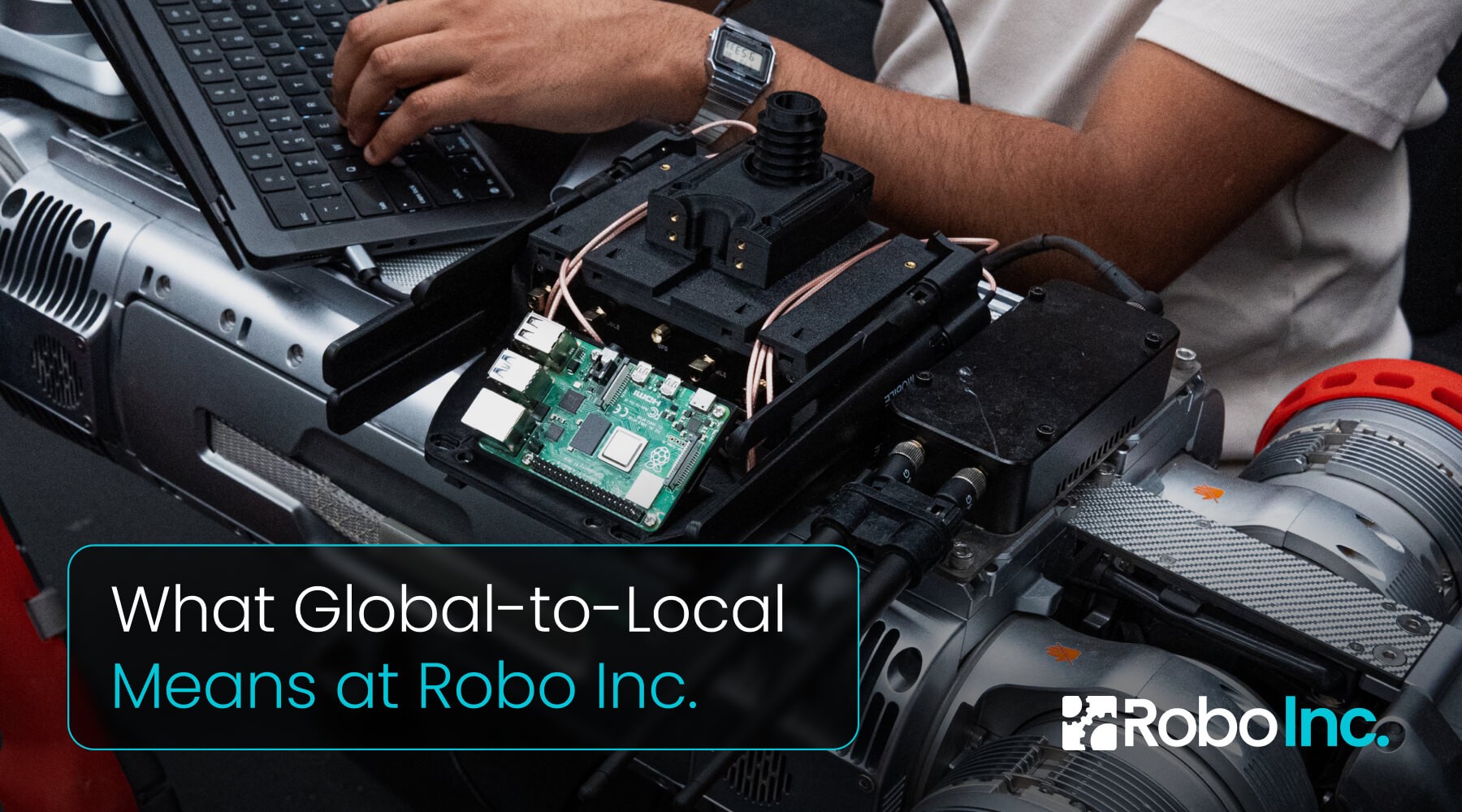
Modern robotics is global.
The components inside a robotic system may come from different regions. Computing, sensing, mobility, communications and software each have their own supply chains, technical strengths and development cycles. Pretending otherwise does not make a deployment more secure, capable or reliable.
Robo Inc.'s approach is to work with that reality while building more of the responsibility for the finished system in the United States.
We call it global-to-local: combining global robotic platforms and components with U.S.-based engineering, software, integration, production, testing, service and support.
The important word is not global or local. It is responsibility.
Start with the application
Robo Inc. is developing around a focused set of core robotic platforms that can be configured for different applications. The base platform matters, but it is only the starting point.
We begin with the customer's operational problem:
What work needs to be done?
Where will the system operate?
Who and what will it interact with?
What software and equipment must it connect to?
What performance is realistic today?
What conditions should cause the system to stop or hand control to a person?
Those questions shape how the system is built. In some environments, mobility may matter most. In others, sensing, reach, stability or the ability to carry a specialized payload may be more important.
Robo Inc. will have a significant role in configuring the underlying system, selecting and configuring its components, and developing the custom payloads, software and integrations around it. This allows a common platform to become a purpose-built solution for a particular operating environment and workflow.
Build the solution around the hardware
A robotic platform is only one part of a working deployment.
The system also needs software controls, connections to customer workflows, an operating process, defined user access, testing and a plan for support. It needs to work within the physical and technical environment where it will be used, not only under demonstration conditions.
Robo Inc. is being built to bring those pieces together. The company's U.S.-based work will include:
engineering the system around a defined application;
integrating software, sensors, payloads and customer workflows;
testing the configuration and its operating boundaries;
reviewing relevant data flows, network access and software controls;
preparing customers and operators for deployment; and
providing service and support after the system enters use.
This is how global technology becomes a customer-specific operating system rather than a collection of components.
Make data and access part of the deployment conversation
Robotic systems can combine cameras, microphones, environmental sensors, operational data, user commands and connections to other software. The questions surrounding that data cannot wait until installation is complete.
Robo Inc. is designing security and safety checkpoints into its integration process. The review considers data flows, network access, software controls, the operating environment and risks associated with the specific application.
There is no single label that resolves those questions for every customer. Requirements differ by platform, configuration, environment and use case. A research lab, a commercial facility and a public-facing setting may need different controls and review processes.
Our role is to address the requirements that apply to the deployment without overstating what the system or the review can guarantee.
Local support is part of the system
A deployment does not end when a robot arrives.
Operators need to understand how the system works and when to intervene. Software and configurations need to be maintained. Parts, repairs and upgrades need a clear path. Performance needs to be evaluated against the task the system was selected to perform.
RoboStore's experience shipping more than 1,500 robots and serving 4,500 customers has shown that capable hardware is not always used to its full potential without the right preparation. Robotics can become overwhelming when integration, training and support are addressed too late. A clear operating plan helps customers introduce the system with confidence and expand its role over time.
Robo Inc. was created to carry responsibility further: from selecting and configuring the system through integration and ongoing support.
Build U.S.-based robotics capacity
Robo Inc.'s global-to-local model combines global robotics supply chains with U.S.-based engineering, software, integration, production, testing, service and support.
Robo Inc. plans to open a 66,000-square-foot facility on Long Island, New York, by the first quarter of 2027. The facility will bring engineering, software, integration, production, testing, service and customer support together in the United States.
Bringing those functions together creates a clearer path from the initial application through deployment and long-term support. It also gives U.S. organizations a domestic team responsible for helping turn robotic technology into a system built around their operational requirements, an approach reflected in the national coverage that followed the launch.
Practical systems, supported over time
General-purpose robotics remains an important long-term direction for the industry. Organizations also have useful work that needs to be done now.
Global-to-local is how Robo Inc. intends to close that gap: use capable technology from the global market, engineer it around a specific American application, establish clear boundaries, integrate it into the customer's workflow and remain responsible for the deployment after launch.
That is the foundation for practical robotics built and supported in the United States.
Have a specific job in mind?
Global-to-local starts with one question: what work needs to be done? Tell us about the application, the operating environment and the systems it needs to connect to, and we will be direct about what is realistic today and what it takes to support over time.