Company News
·
August 14, 2026
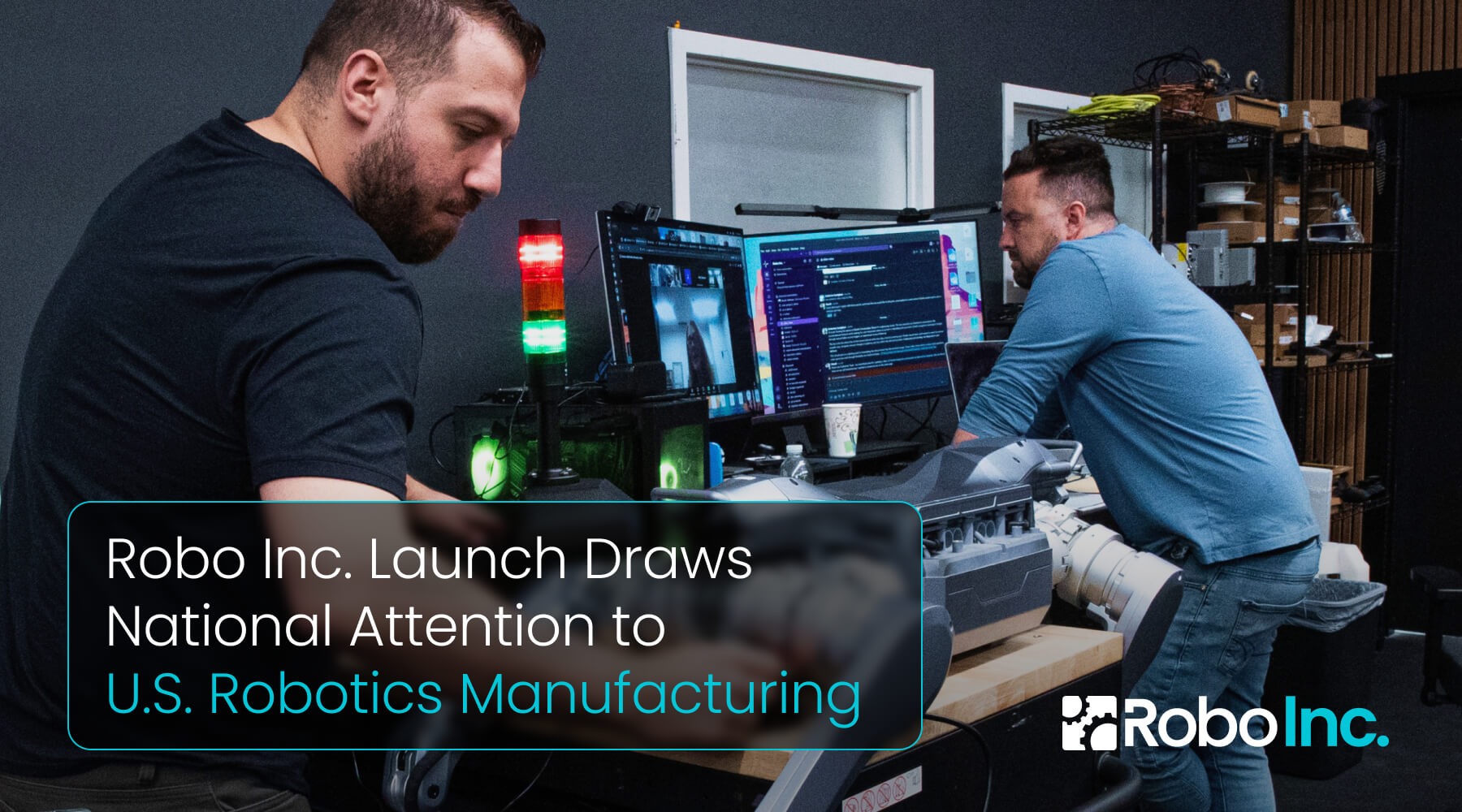
The launch of Robo Inc. has prompted a broader conversation about what it will take to build and deploy practical robotic systems in the United States.
Since RoboStore announced Robo Inc. on August 10, coverage from national technology publications and robotics-industry outlets has focused on three parts of the company's approach: U.S.-based manufacturing and integration, a hardware-agnostic model, and an emphasis on systems built around specific operational needs.
The New York Times featured Robo Inc. in a broader examination of the challenge facing American humanoid robotics manufacturers as they work to build domestic capability in a market shaped by global supply chains and significant cost differences.
Ars Technica reported on RoboStore's transition from distribution toward manufacturing and systems integration. Its coverage highlighted the experience behind the new company, including more than 1,500 robots shipped and work with customers across research, education and industry.
The Robot Report focused on the practical side of the launch: Robo Inc.'s plan to combine global supply chains with U.S.-based engineering, software, integration, production, testing, service and support. AI Insider similarly highlighted the planned 66,000-square-foot facility on Long Island, New York, and the company's focus on application-specific systems rather than a single platform intended to perform every task.
Additional reporting from PCMag, Robotics 24/7 and RoboticsTomorrow examined the domestic manufacturing push and the growing demand for clearer data boundaries, security reviews and long-term operating support.



The coverage reflects a larger question
The attention is not only about the launch of a new company. It reflects a question facing the entire U.S. robotics market: How do organizations move from promising hardware to systems that can perform useful work in real operating environments?
Robo Inc. was created to work in that gap.
The company starts with the job that needs to be done, then evaluates the robotic platform, components, software, integrations and support structure required for that application. It does not depend on one form factor or one manufacturer. Platform and component choices are made according to the needs of the deployment.
That approach is informed by patterns observed across thousands of purchases, deployment questions, repairs and integration requests through RoboStore. Customers rarely need mobility, perception or artificial intelligence in isolation. They need those capabilities connected to a defined workflow, with realistic expectations and clear operating boundaries.
Building a U.S.-based solution layer
Robo Inc. plans to bring engineering, software, integration, production, testing, service and support together in the United States. Its Long Island facility is expected to be fully operational by the first quarter of 2027.
The goal is not to suggest that every component in a modern robot can immediately be sourced from one country. Robotics depends on global technology and supply chains. Robo Inc.'s role is to own the solution delivered to the customer: how the system is configured, how it fits the application, how it is tested and how it is supported over time.
Security and safety reviews are also being designed into the integration process. Those reviews include data flows, network access, software controls, operating environments and risks specific to the application. Requirements will vary by customer, system and use case, and the company will work with organizations to address the cybersecurity, safety and regulatory requirements that apply to their deployment.
Practical work comes first
The robotics industry continues to make rapid progress toward more capable and general-purpose machines. Robo Inc. is focused on what organizations can put to work responsibly now.
That means beginning with a specific operational problem, selecting technology around it and being direct about what the resulting system can and cannot do. It also means planning beyond the initial demonstration to include integration, training, maintenance, service and support.
Recent coverage has helped bring that position into a larger national discussion. The next step is execution: building the U.S.-based capacity, processes and systems needed to turn robotics technology into dependable operational tools.
Robo Inc. will continue sharing verified milestones as that work progresses.
Planning a robotics deployment?
Tell us about the job, operating environment and systems involved.